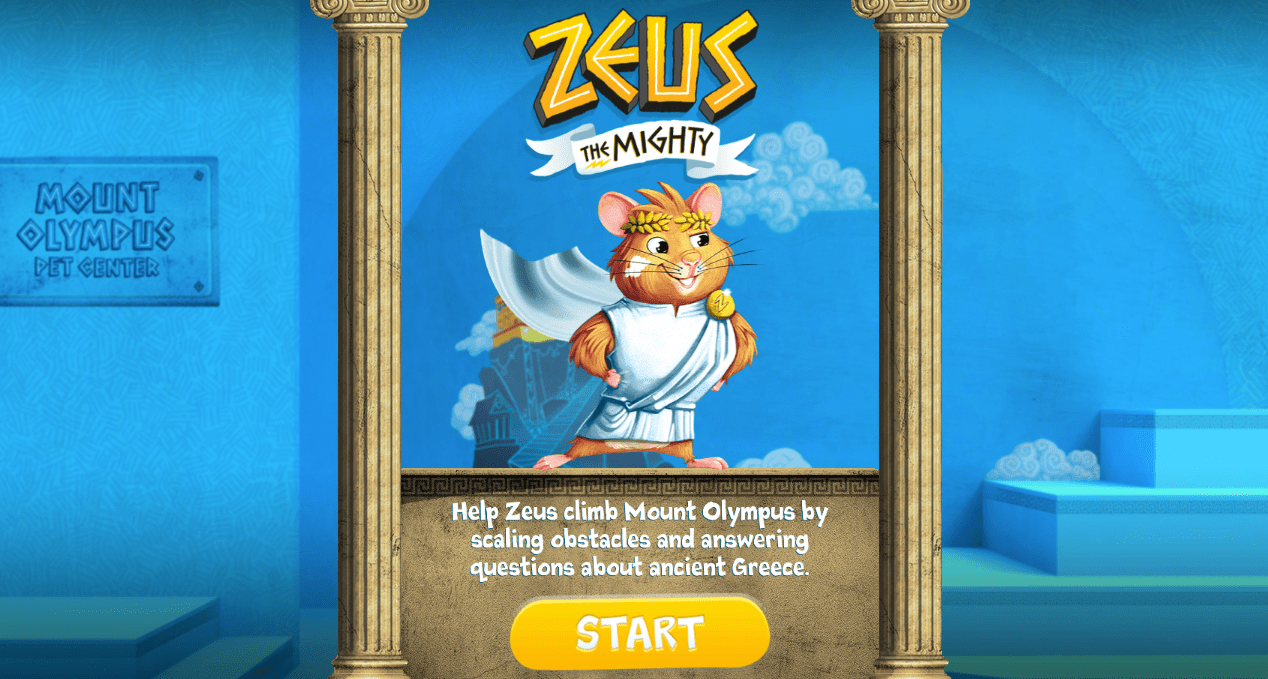
Favorite Game: Zeus the Mighty Game
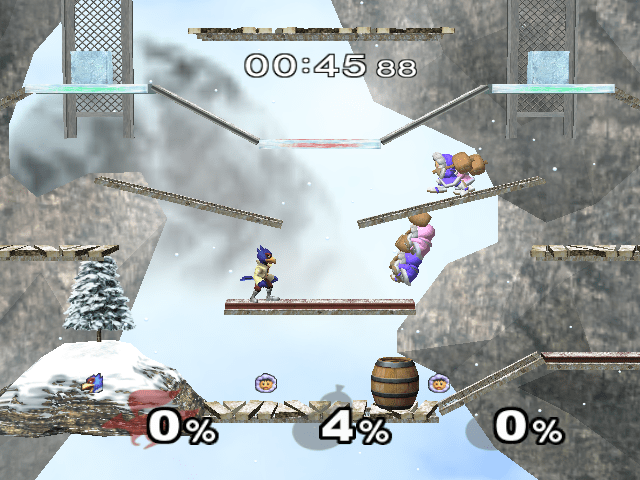
I was intrigued to pick the game, Zeus the Mighty Game because I have a love for Greek and Roman history (including Mythology). So, the simple title and subject of the game influenced my decision-making to play the game rather than the other games I played like “The Nerd Personality Quiz” and Bug Bash. The core goal of the Zeus the Mighty game is similar to many popular games such as the Super Smash Bro’s icicle mountain map, on Nintendo Game Cube console (visual shown below). Essentially, the goal is to always stay ahead of the camera’s speed and each “round” gets more difficult with advancing velocity/speed, moving objects, more obstacles, etc.
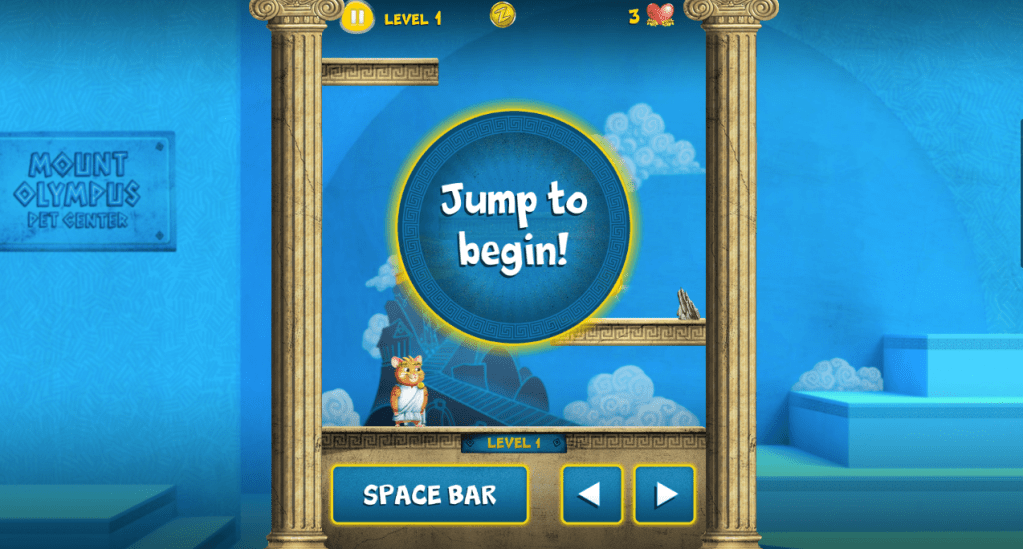
In Zeus the Mighty game, once playing, I didn’t exactly enjoy the “reward” the way I thought I would due to the misleading message that there would be “knowledge” required to play. I thought I’d be more challenged than I was. That’s not to say it’s not addicting to see how far you’d go with it. This game simply feels like it’ll never end. Your only motivation is to compete with your previous score. The subconscious goal is to get the “best score” you possibly can because you’re competing with yourself. “Game over” happens you run out of lives or when you simply get too tired! It reminds me of the Helicopter game on AddictingGames.com which I used to play all the time as a kid growing up. Instead of a horizontal challenge, the Helicopter game is a horizontal challenge to dodge the obstacles presented quickly in frame.

Here there’s some minor differences, the first 5 rounds are pretty easy as far as speed goes which is why I didn’t feel so challenged. Even the illustrations seem to be geared towards a younger crowd. Although the illustrations seem to draw more youthful people (aka children), I find it uplifting and quirky to play a game that’s lighthearted, and designed with vibrant color palette and paintbrush-like textures to the background illustrations. The columns on the right and left match the subject of the game as well. Blue and brownish-yellow are great colors to incorporate together since they are complimentary colors on the color wheel. Due to this, it’s a very cohesive, well-put together game. Everything about the “aesthetic” and elements follows the core functionality and subject on Mythology portrayed.
When playing, after each round is complete, there is in fact a questionnaire to challenge the player on Mythological “facts” (I say that loosely in quotations because of how Mythology stories and information changed throughout time). This questionnaire is pretty easy as well. The questions are straight forward, multiple choice (only between two choices, making it a 50/50 chance), not requiring too much critical thinking but rather tapping into memorized information. Could we say that’s “critical thinking”? You’re not really applying that information to something but rather regurgitating your knowledge back out.
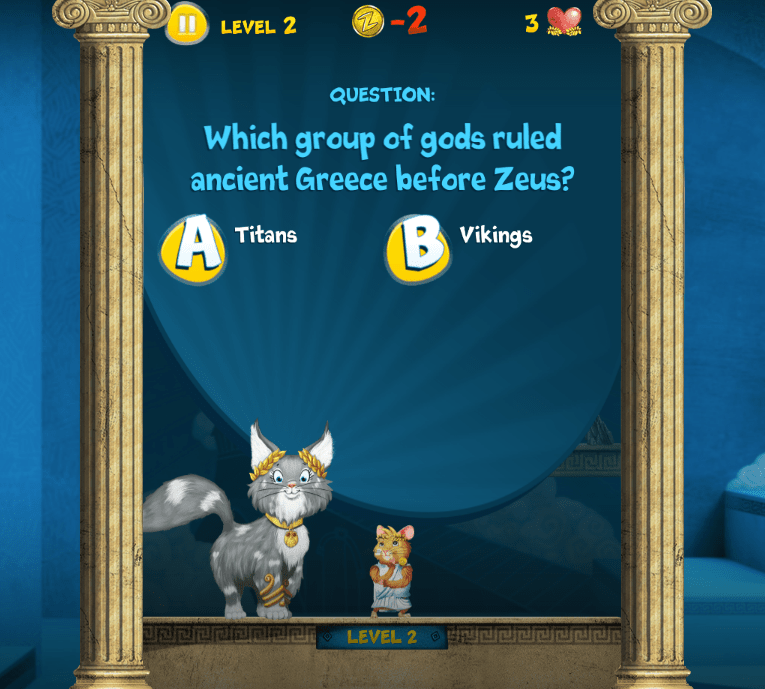
At first, I wanted to get them right. But, like I always do, I challenge the system. I wanted to see what would happen if you get the information wrong (because clearly I knew the answers!). So, you lose a life if you get the information wrong. You start the game with 3 lives and can gain more if you collect 20 coins (there’s about that many in each level) or if you answer the questions correctly at the end of each level you are rewarded with 6 coins. The crazy thing is, you don’t lose a life if you are in the negative or at 0 with your coins. However, you lose coins if you hit an obstacle. At least I know I have full control of the outcome within this game, nothing is chance. If I mess up with timing of the keyboard/buttons, then it’s on me that I fail or succeed.
I screenshotted the rules below as well because they were pretty clear since they were stated right before playing:
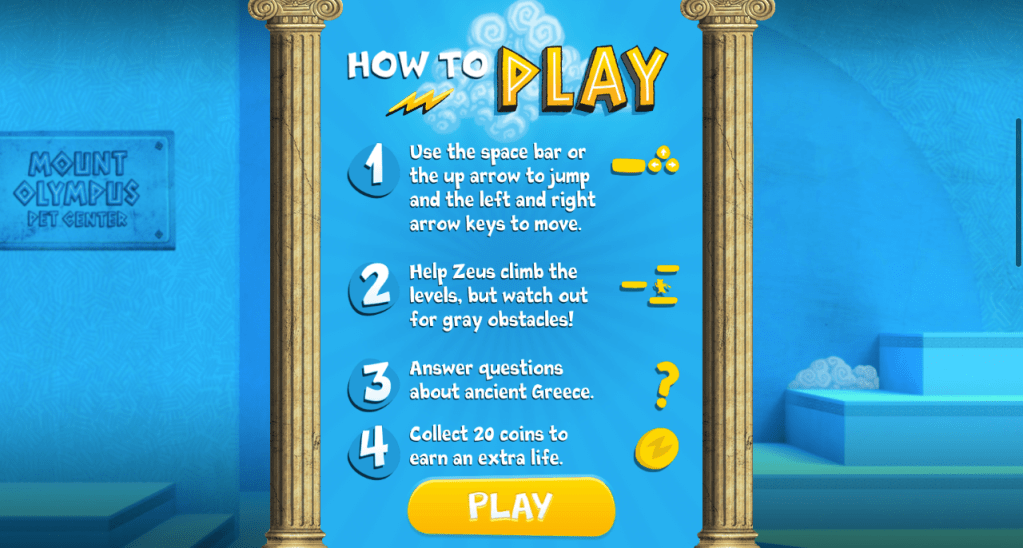
Overall, it definitely was fun to do rather than the other ones. Felt more upbeat and could get a lot out of it: competition, education (if you don’t know Greek Mythology), and high-blood pressure (because you want to get a better score each time you refresh and start over!). As you review the rules, you definitely can see the game’s core dynamic is a combination of “collection” of coins and “race to the finish” (even though it seems never ending).
As a learning game designer, I got to reflect on the elements used within this game that either I want to implement in mine or to avoid at all costs. It’s safe to say I learned more about what to implement rather than avoid. So, I think how everything came together and was well-thought out is important. The subject of the game has so much weight on how the game will turn out as far as experience, form and functionality. Here, everything flowed together and fitted pretty well. I for one would make it harder if you’re dealing with a different age group, but as for National Geographic kids, this game works so well. The pace was thought out too because it goes very slow within each round, giving time for the player to catch up if they fall or slip up. This shows the intentional design behind the game which I want to make sure I implement in the minor details and as a whole when it comes to designing my own.
 Serious Games Blog